Intentional Pausing
A brief pause of two to five minutes between focused intervals gives you a short break before the next stretch of work, which many people find helps them return with fresher attention.
Focus is not about forcing attention. It is about creating conditions that support steady, natural concentration over time.
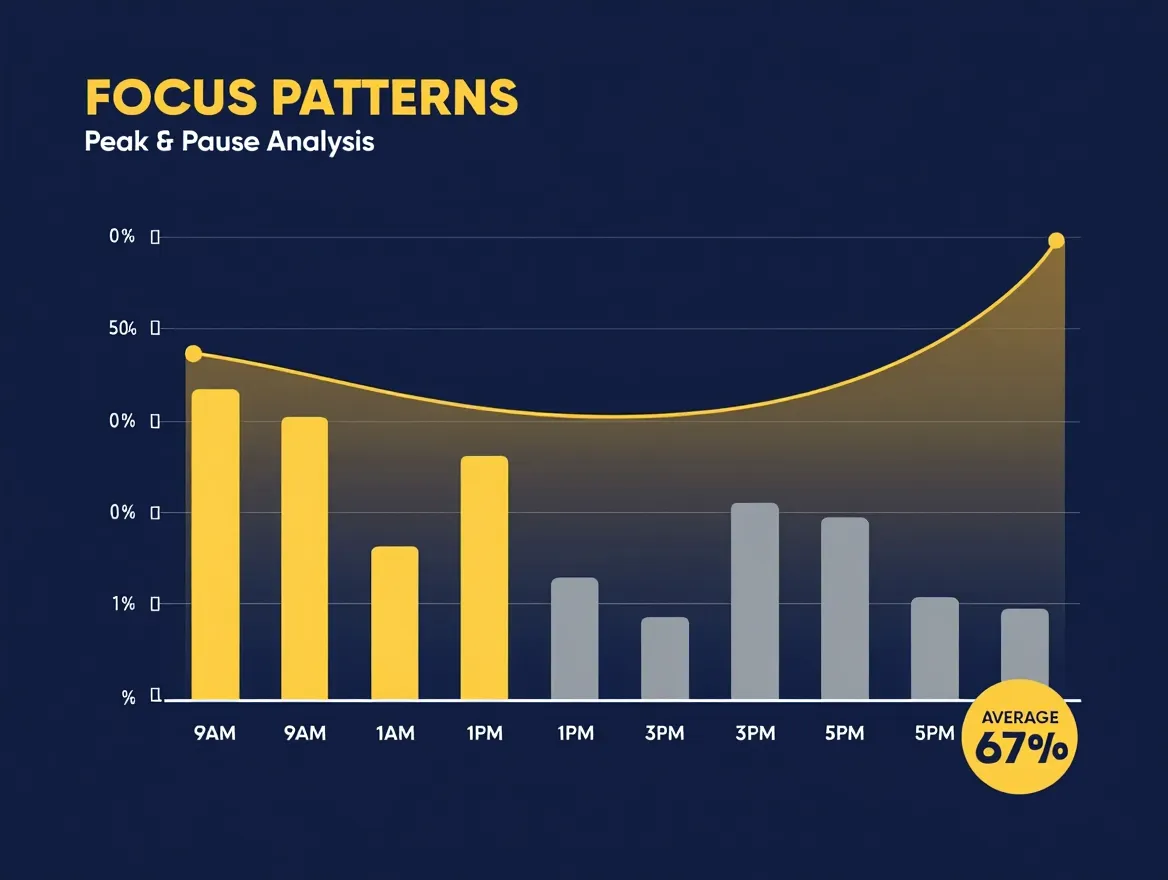
Attention naturally fluctuates throughout the day. Rather than fighting these fluctuations, a rhythm-based approach works with them, alternating between periods of engagement and brief recovery.
This perspective treats focus as something to be supported rather than forced, recognizing that sustainable concentration arises from conditions rather than willpower alone.
Brief pauses between periods of concentration are not interruptions — they are an integral part of sustained attention. Here are some concepts to consider.
A brief pause of two to five minutes between focused intervals gives you a short break before the next stretch of work, which many people find helps them return with fresher attention.
Changing sensory input during breaks — looking at a distant point, stepping away from a screen, or noticing sounds — provides a contrast that can refresh attention.
Gentle physical movement during breaks, such as standing, stretching, or brief walking, introduces a shift that can feel refreshing after sitting and help you ease back into focused work.
Below is a step-by-step framework for building a focus routine. Adapt it to your own rhythm and preferences.
Before changing anything, spend a few days noticing when you naturally feel more focused and when your attention tends to drift. Record these observations.
Based on your observations, experiment with focus intervals that feel sustainable. These might range from 20 to 50 minutes depending on the task and your current state.
Schedule brief breaks between focus intervals. The key is consistency — making breaks a regular part of your rhythm rather than something you take only when exhausted.
Reduce unnecessary distractions in your workspace. A calm, organized environment supports the conditions for focus without requiring additional mental effort to maintain.
Periodically reflect on how your routine feels. Adjust interval lengths, break activities, or session timing based on what you notice. The routine should serve you, not constrain you.
Small details can influence the quality of focused time. These tips are suggestions to experiment with, not requirements.
During focus intervals, silencing non-urgent notifications removes a common source of interruption and supports unbroken attention.
Keeping water nearby and sipping regularly is a simple way to support physical comfort during periods of concentrated activity.
Soft, even lighting reduces visual strain and creates a calmer environment. Avoid harsh overhead lights when possible.
Working on one task at a time allows attention to deepen naturally. Multitasking often fragments focus and increases the effort needed to maintain it.
All materials and practices presented are educational and informational in nature and are aimed at supporting general well-being. They do not constitute medical diagnosis, treatment, or recommendation. Before applying any practice, especially if you have chronic conditions, please consult a physician.